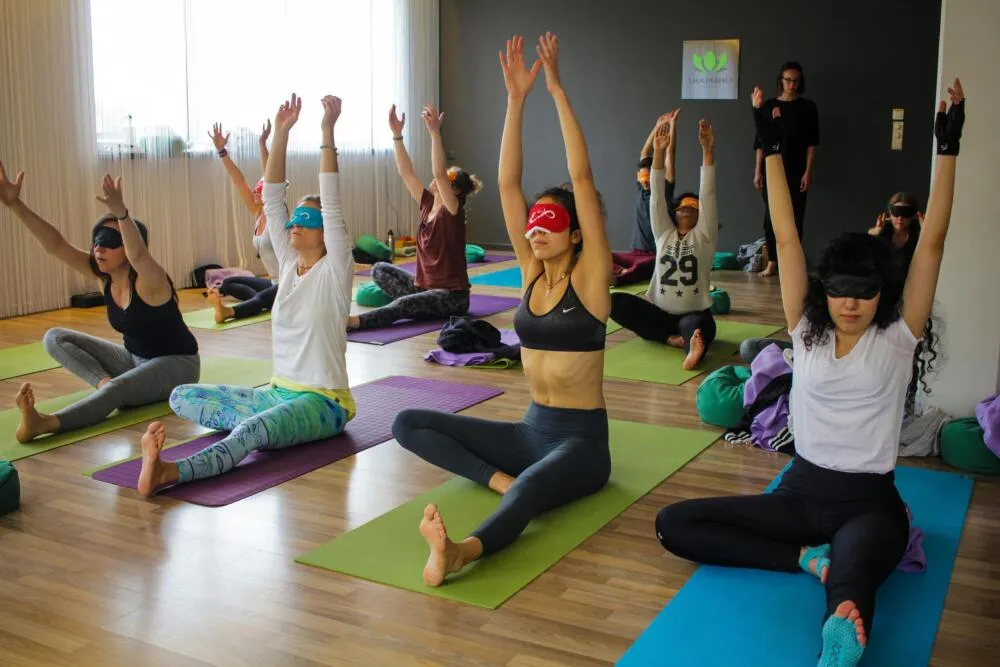
Yoga Nidra is often described as “yogic sleep.” While this is a useful starting point, it does not fully describe the depth of the practice.
Yoga Nidra is a systematic practice in which the body moves towards deep relaxation while awareness remains present. Rather than simply trying to empty the mind or fall asleep, the practitioner is guided through carefully structured stages of awareness.
This systematic approach is what makes Yoga Nidra so powerful.
At Yogalife, we believe that learning Yoga Nidra should go far beyond memorising a script or learning how to guide someone into relaxation. A deeper understanding begins with asking:
- Why does Yoga Nidra work?
- What happens to the brain and mind during the practice?
- Why does the sequence matter?
- What are the different layers of consciousness?
- How do subconscious patterns influence our lives?
- And how can a systematic practice support genuine transformation?
Our 60-hour Yoga Nidra training explores these questions in depth.
Yoga Nidra Is More Than Relaxation
Modern life keeps many of us in a state of continuous stimulation. We move from one task to another, constantly process information and often carry tension without even realising it.
We may rest physically, but the mind continues to work.
Yoga Nidra offers a different kind of rest.
Through a carefully designed process, the practitioner is guided away from external stimulation and towards progressively deeper levels of awareness. The body can become deeply relaxed while a part of the mind remains awake and observant.
This creates a unique space between waking, dreaming and sleeping.
It is within this space that Yoga Nidra can become much more than a relaxation practice.
It becomes a practice of awareness.
And awareness is the beginning of transformation.
Understanding the Brain Waves
One of the fascinating aspects of Yoga Nidra is its relationship with different states of brain activity.
During ordinary waking life, the brain is predominantly associated with the beta state, which is connected with active thinking, problem-solving and external engagement. As we relax, brain activity can shift towards slower patterns associated with relaxation and internal awareness.
Yoga Nidra provides an opportunity to explore these transitions consciously.
Rather than simply going from being awake to falling asleep, we learn to observe the movement of awareness through different states.
Understanding brain waves gives students another perspective on what they experience during practice. It helps answer an important question:
What is actually happening when the body is deeply relaxed but awareness remains present?
This connection between traditional yogic knowledge and our understanding of the brain makes Yoga Nidra a particularly fascinating field of study.
Exploring the Layers and States of Consciousness
Yoga Nidra also opens the door to one of the deepest questions in yoga:
What is consciousness?
Our ordinary experience of ourselves is only one layer of our existence.
We experience the physical body. We experience sensations, emotions and thoughts. We have memories, beliefs, desires and patterns. Yet behind all of these experiences is the capacity to observe them.
Yoga Nidra gives us a practical way to explore these different dimensions.
During the training, students investigate different states and layers of consciousness and learn how the practice guides awareness from the gross towards subtler levels of experience.
This is not simply philosophical knowledge.
The intention is to experience and observe these dimensions through practice.
Understanding the Subconscious Mind
Much of our daily behaviour happens automatically.
We develop habits. We respond emotionally to familiar situations. We repeat patterns even when we consciously want to change them.
Why?
Because not everything influencing our behaviour is operating at the conscious level.
Yoga Nidra provides a framework for exploring the subconscious mind and understanding how impressions, memories, conditioning and repeated experiences can influence our thoughts and behaviour.
When we become aware of these patterns, we create something extremely valuable:
the possibility of choice.
Instead of automatically reacting, we can begin to observe.
Instead of simply repeating a pattern, we can begin to understand it.
And instead of being completely controlled by unconscious conditioning, we can gradually develop greater awareness.
Samskaras: Understanding Deep Patterns
In yogic philosophy, the term Samskara refers to deep impressions or conditioning created through experience.
Every experience can leave an impression.
Repeated experiences can strengthen that impression.
Over time, these impressions can influence how we think, feel and respond to the world.
Some patterns are helpful. Others may no longer serve us.
Yoga Nidra provides a powerful context for observing these patterns without immediately reacting to them.
The purpose is not to fight the mind.
It is to develop awareness of the mind.
That distinction is important.
Transformation does not necessarily happen by forcing ourselves to change. Sometimes it begins by seeing clearly what is already happening within us.
Understanding Habits and Addictions
One of the deeper areas explored in the Yogalife training is the relationship between subconscious conditioning, habits and addictions.
Why do we repeatedly do something even when we know it may not be good for us?
Why can certain behaviours feel almost automatic?
Why can the mind continue returning to the same patterns?
To understand these questions, we need to look beyond conscious willpower.
Habits and addictive patterns can become deeply conditioned through repetition, reward, emotional association and subconscious impressions.
Yoga Nidra does not offer a simplistic promise that one practice will “cure” addiction. Rather, it offers a framework for developing awareness of the patterns beneath our behaviour.
That awareness can become an important part of a broader process of change.
The deeper we understand the mind, the more intelligently we can work with it.
Sankalpa: The Power of Intention
Another important element of Yoga Nidra is Sankalpa — a deeply held intention or resolve.
Sankalpa is more than repeating a positive statement.
It is about establishing a clear direction within oneself.
When the mind becomes quieter and more receptive, intention can be experienced differently than it is during ordinary waking activity.
Students learn how Sankalpa is incorporated into Yoga Nidra and why the timing and context of intention are important.
Rather than simply telling yourself what you want to achieve, Yoga Nidra invites you to connect with a deeper sense of purpose and direction.
Manifestation: From Inner Impression to Outer Experience
The concept of manifestation is often presented in very simplified ways.
The yogic perspective invites a deeper exploration.
Our thoughts influence our attitudes.
Our attitudes influence our choices.
Our choices influence our actions.
Repeated actions create patterns, and patterns can shape our experience of life.
Yoga Nidra allows us to investigate this relationship between thought, intention, subconscious impressions and behaviour.
In the training, students explore manifestation from a yogic perspective and consider how what is cultivated internally can influence what eventually becomes expressed externally.
This is not about magical thinking.
It is about understanding the relationship between inner conditioning and outer experience.
Why Does the Systematic Approach Matter?
This is one of the most important principles in the Yogalife approach.
Yoga Nidra is not simply a collection of relaxing techniques.
The order, progression and intention of the practice matter.
Different stages have different purposes.
Different sequences can create different experiences.
Different intentions can guide the practice in different directions.
For example, a practice designed primarily for deep physical relaxation may be structured differently from one intended to cultivate deeper awareness, meditation, emotional balance or work with particular patterns.
When students understand this systematic approach, they stop asking only:
“What should I say during Yoga Nidra?”
They begin asking:
- “Why am I doing this stage?
- What is its purpose?
- What is happening in the practitioner?
- What is the goal of this particular practice?”
This shift—from following instructions to understanding methodology—is an essential part of becoming a skilled Yoga Nidra teacher.
Different Goals Require Different Approaches
There is no need for every Yoga Nidra session to be identical.
The methodology can be adapted according to the intention of the practice.
A session may focus on:
- Deep physical and mental relaxation
- Developing body awareness
- Preparing for meditation
- Cultivating concentration
- Working with Sankalpa
- Exploring subconscious patterns
- Developing emotional awareness
- Creating greater inner balance
- Supporting self-observation
- Deepening awareness and consciousness
The teacher needs to understand the relationship between the goal and the methodology.
This is why we place such importance on understanding the principles behind Yoga Nidra rather than simply learning a fixed sequence.
Rotation of Consciousness
Rotation of Consciousness is one of the distinctive elements of traditional Yoga Nidra.
Awareness is systematically moved through different parts of the body.
This is not simply a body scan.
Students explore why the technique is structured in a particular way and how systematically moving awareness can influence concentration, relaxation and the relationship between awareness and the body.
The practitioner learns to experience the body not as something to control, but as a field of awareness.
Breath, Prana and Awareness
Breath is closely connected with our state of mind.
When we are stressed, the breath often changes. When we relax, the breath naturally becomes quieter and more refined.
Yoga Nidra uses awareness of the breath as part of its systematic process.
Students explore the relationship between breath, prana, awareness and mental states, developing a deeper understanding of why breath awareness is incorporated into the practice.
Working with Opposite Sensations
Yoga Nidra can also involve experiencing contrasting sensations.
For example, students may explore experiences such as heaviness and lightness, warmth and coolness, or other pairs of opposites.
The purpose is not simply to imagine sensations.
It is to develop the capacity to observe different experiences without immediately becoming attached to or rejecting them.
This can cultivate a greater sense of balance and awareness.
Visualisation and the Deeper Mind
Visualisation is another important component of Yoga Nidra.
The use of imagery can create a different relationship with the mind than ordinary analytical thinking.
During the training, students explore traditional visualisation practices and investigate how imagery can be used within Yoga Nidra to deepen awareness and work with the subtler dimensions of the mind.
The aim is not merely to “imagine something.”
It is to understand why particular forms of visualisation are used and where they fit within the systematic structure of the practice.
Exploring the Five Koshas
The yogic model of the five Koshas provides another framework for understanding human experience.
These layers can be understood as:
- Annamaya Kosha — the physical body
- Pranamaya Kosha — the energetic dimension
- Manomaya Kosha — the mental and emotional dimension
- Vijnanamaya Kosha — the wisdom or discernment dimension
- Anandamaya Kosha — the dimension of deep peace or bliss
Yoga Nidra can be explored as a journey through these different dimensions of experience.
This gives students a broader framework for understanding what they experience during practice and why Yoga Nidra is considered a deeply inward practice.
Yoga Nidra and Meditation
Yoga Nidra and meditation are closely related, but they are not the same practice.
Yoga Nidra can create a powerful foundation for meditation by helping the practitioner release physical tension and settle mental activity.
As the body becomes quiet and the mind becomes more refined, awareness can become increasingly subtle.
Students explore how Yoga Nidra can function as a bridge between deep relaxation and meditation, while also understanding the distinct purpose of each practice.
Learning the Art of Teaching Yoga Nidra
Understanding the theory is only one part of becoming a Yoga Nidra teacher.
The way a teacher speaks matters.
The pace matters.
The pauses matters.
The tone of voice matters.
The choice of words matters.
Even silence can become part of the teaching.
Students learn how to guide awareness through verbal instruction while maintaining a calm, clear and steady presence.
They also learn how to structure their sessions and develop their own Yoga Nidra practices instead of becoming dependent on pre-written scripts.
From Following a Script to Understanding the Method
A beginner may think:
“I need a good Yoga Nidra script.”
A trained teacher learns to ask:
- “What is the purpose of this practice?”
- “Who am I teaching?”
- “What experience am I trying to create?”
- “Which methodology is appropriate?”
- “Why am I choosing this sequence?”
This is where Yoga Nidra becomes a real teaching discipline rather than simply a guided relaxation exercise.
The teacher begins to understand the architecture behind the practice.
Why Can Yoga Nidra Be Transformative?
Transformation begins with awareness.
We cannot consciously change something that we cannot see.
Yoga Nidra creates an opportunity to observe ourselves in a different way.
We begin to notice the body.
We notice the breath.
We notice sensations.
We notice thoughts.
We notice emotions.
We notice patterns.
And eventually, we can begin to notice the one who is observing all of these experiences.
This movement from automatic reaction towards conscious awareness can be deeply transformative.
We begin to move from:
- Reaction → Awareness
- Conditioning → Choice
- Restlessness → Stillness
- Unconscious patterns → Conscious observation
- Tension → Deep relaxation
- Habit → Greater freedom
The transformation is not necessarily dramatic or immediate.
It can be subtle.
It can happen through repeated practice, increased awareness and a gradual understanding of ourselves.
Experience Before You Teach
At Yogalife, we believe that Yoga Nidra should not be learned only intellectually.
You need to experience it.
Throughout the training, students have the opportunity to practise Yoga Nidra repeatedly and observe its effects within themselves.
This personal experience is essential.
A teacher who understands Yoga Nidra only from a book can explain the technique.
A teacher who has experienced the practice deeply can guide it with greater understanding, sensitivity and presence.
What Makes the Yogalife Approach Different?
The Yogalife Yoga Nidra training brings together traditional yogic knowledge, practical teaching methodology and deeper exploration of the mind and consciousness.
The intention is not simply to teach you how to conduct a 30- or 45-minute relaxation.
It is to help you understand:
- What happens in the brain?
- What happens to awareness?
- What are the different layers of consciousness?
- How does the subconscious mind influence our lives?
- How do Samskaras and conditioning create patterns?
- How can we work consciously with habits and repetitive patterns?
- What is the role of Sankalpa?
- How does manifestation work from a yogic perspective?
- Why does the sequence matter?
- Why can different methodologies support different goals?
- And how can all of this be translated into effective teaching?
Become a Teacher Who Understands the “Why”
The ultimate goal of the training is not simply to give you more techniques.
It is to give you understanding.
Because when you understand the “why,” you can teach with much greater clarity.
You can adapt.
You can create.
You can respond to the needs of your students.
And you can guide Yoga Nidra as a meaningful journey rather than simply reading words from a page.
Yoga Nidra is not simply about sleeping.
It is not simply about relaxing.
It is not simply about listening to a recording.
It is a systematic journey into awareness.
A journey through the body.
Through the breath.
Through the mind.
Through the subconscious.
Through intention.
Through the layers of consciousness.
And ultimately, towards a deeper understanding of ourselves.
60-Hour Yogalife Yoga Nidra Training
- Go beyond relaxation.
- Understand the mind.
- Explore consciousness.
- Understand the methodology.
- Experience the practice.
- Learn to teach with depth.